Remove dried grass stains
Professional tips for removing dried grass stains
Remove dried grass stains can be quickly and easily. With our tips you are on the clean side.
Being outside is fun, romping through the meadow or rolling through the grass together even more so. Meadows are fragrant and invite you to relax and play.
But it’s easy to slip or get grass stains in your pants or shirt while sitting comfortably on the lush greenery.
Grass stains from the soccer field are also typical, especially if you often have physical contact and sweep over the grass surface. Then there are stains in socks, the shoes, pants and T-shirt.
These grass stains are stubborn and dry up quickly. But now how to remove the dried grass stains at home?
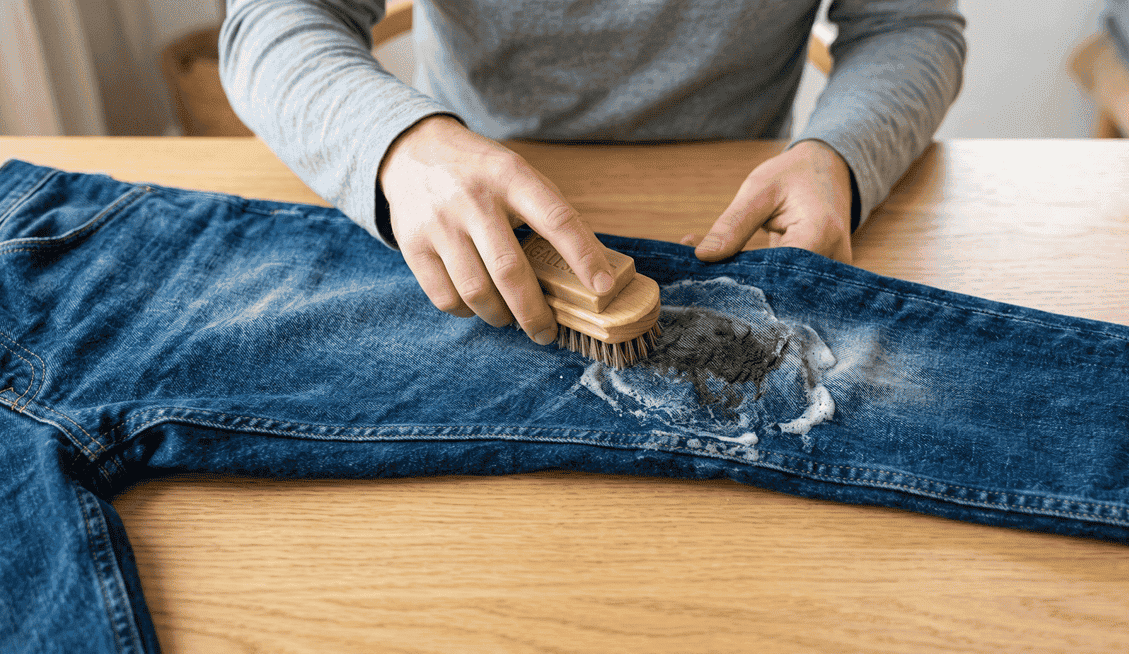
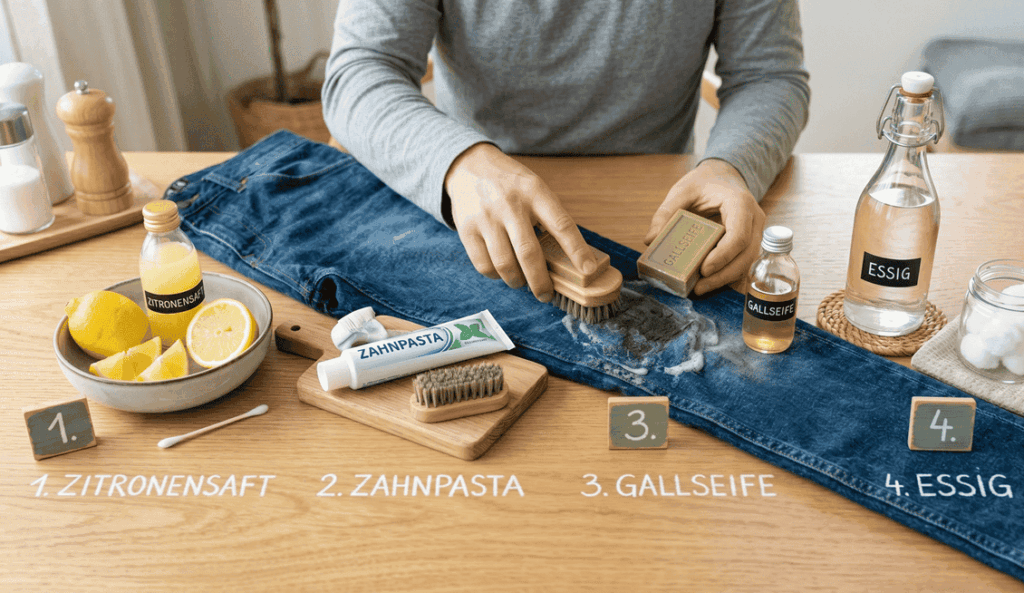
Gall soap or curd soap: This method is particularly suitable for jeans or more insensitive fabrics. The soap is applied directly to the grass stains and worked in with a brush and now left to draw. Then rinse the soap with clear and put the garment in the wash.
Lemon juice or vinegar: Lemon juice or vinegar are good for shoes and bright. insensitive clothing. For this purpose, a few drops are applied to the affected area and left to act for about an hour (lemon juice), or about 20 minutes (diluted vinegar).
Be sure to note that lemon juice and vinegar have a slight bleaching effect.
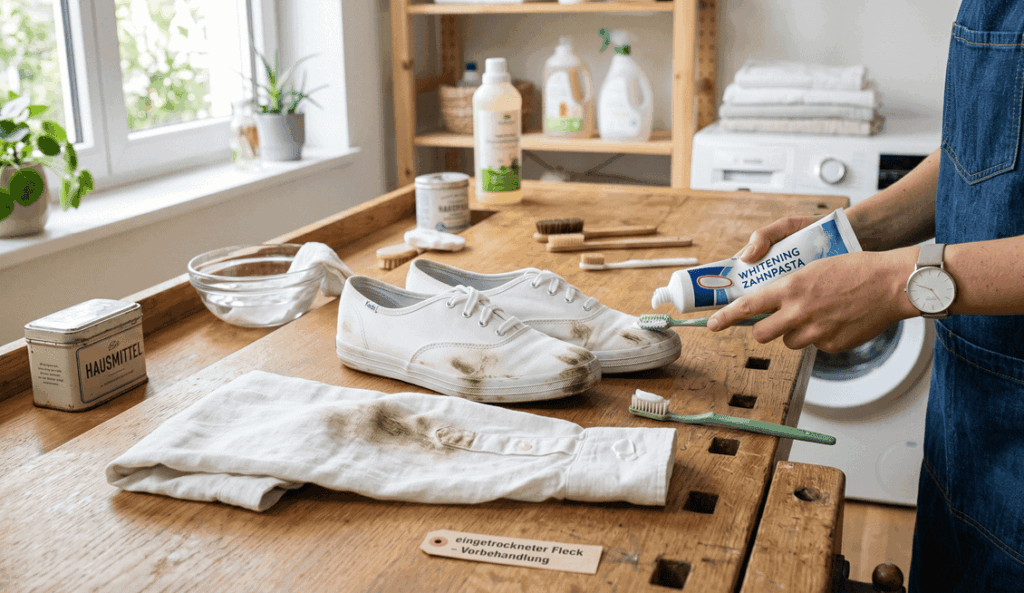
Toothpaste: Menthol toothpaste with whitening agent is suitable for very light and white clothes, as it also has a whitening effect and dissolves the discoloration. To do this, rub the toothpaste into the grass stain with a brush.
However, this should be left to dry for an hour and then rinsed with warm water before washing.
Potatoes: Potatoes are suitable for smooth fabrics made of cotton or polyester, because the starch they contain takes the green out of the clothes. To do this, cut open the potato and rub the cut surface over the grass stains. After a short exposure time, the garment goes into the washing machine.
Baby shampoo: If you ever have grass stains in wool clothing, it is best to resort to baby shampoo. Since this is slightly greasy, at the same time it nourishes the wool, but is also able to gently remove the discoloration caused by the green of the grass.
To do this, soak the garment in a bowl of 50/50 baby shampoo and water, then wash it out by hand – no wash cycle follows here. Remove dried grass stains can be so simple.
Grafflecken entfernen
Remove dried grass stains - this is how you do it
After these pre-treatments (except for wool), the garment affected by the dried grass stain can either be washed by hand to closely observe its success or if it needs to be done quickly, or put in the washing machine with it.
It is helpful to wash the garment at as high a temperature as possible that is still tolerable to remove the grass stains. You should first let it sit for about 30 minutes to an hour with the appropriate stain remover.
However, a pre-treatment is necessary to dissolve the grass stains, otherwise they will remain visible in the beloved clothes for a few more washes.
Last but not least, the last residue of color can be completely faded by placing it in the sun. However, a place in the shade should be chosen here, otherwise the color will also suffer (white clothes can also be put in the sun).
So you can release your child again with cheerfulness into the wide world or go yourself on a summer day comfortably on a blanket in the beautiful nature without much worry.
Schritt-für-Schritt-Anleitung für hartnäckige Fälle
Wenn der Fleck schon wochenalt ist, gehst du am besten strategisch in fünf Schritten vor:
Trockenreinigung: Bürste grobe, eingetrocknete Erdreste vorsichtig im trockenen Zustand mit einer weichen Bürste ab.
Gezielte Vorbehandlung: Wähle eines der oben genannten Hausmittel (z. B. Gallseife für Jeans) und trage es auf.
Einweichen im Kaltwasserbad: Lege das vorbehandelte Kleidungsstück für 30 Minuten in ein Becken mit eiskaltem Wasser.
Maschinenwäsche: Wasche das Textil bei der höchsten Temperatur, die laut Pflegeetikett für den Stoff zugelassen ist. Nutze bei Buntwäsche ein hochwertiges Kompaktwaschmittel, bei weißer Wäsche ein Vollwaschmittel in Pulverform (enthält Fleckenbleiche).
Die Wunderwaffe Sonne: Ist nach dem Waschen noch ein minimaler Schatten zu sehen? Hänge das feuchte Kleidungsstück direkt in die pralle Sonne. Die UV-Strahlung zerstört die verbliebenen Farbpigmente restlos (Vorsicht bei empfindlichen bunten Stoffen, diese lieber im Halbschatten trocknen).
Be sure to check out our Wiladu stain guide for even more useful tips. There you will find, for example, information on how to remove strawberry stains, cream stains and numerous other types of stains easily, quickly and sustainably. In addition, it is always worth taking a look at our cleaning agents. Among them you will find enzyme-free detergents, which are particularly gentle to natural fibers. In addition, you actively protect the environment.
Häufig gestellte Fragen zum Grasflecken entfernen
Ja, aber es ist deutlich schwerer, wenn das Kleidungsstück bereits heiß gewaschen oder im Trockner war. Um den fixierten Fleck zu lösen, musst du ihn intensiv mit Gallseife oder einer Essig-Wasser-Mischung vorbehandeln, mehrere Stunden einweichen lassen und den Waschgang mit einem enzymatischen Fleckenspray wiederholen.

Backpulver (oder Natron) ist ein hervorragender Fleckenlöser. Mische es mit etwas kaltem Wasser zu einer dicken Paste, trage diese auf den eingetrockneten Grasfleck auf und lass sie 20 Minuten einwirken. Da Backpulver leicht bleichend wirkt, ist diese Methode besonders gut für helle Textilien geeignet.
Das liegt am Wirkstoff Chlorophyll (Blattgrün). Dieser Pflanzenfarbstoff verhält sich chemisch ähnlich wie eine Textilfarbe und ist zudem nicht wasserlöslich. Ohne Tenside (wie in Seife) oder Lösungsmittel (wie Alkohol/Säure) lässt sich die Verbindung zwischen Farbstoff und Faser nicht aufbrechen.
Bei Schuhen aus Stoff (Canvas) oder Leder hilft eine Mischung aus weißer Menthol-Zahnpasta und einem Spritzer Zitronensaft. Reibe die Paste mit einer Zahnbürste auf die betroffenen Stellen, lass es einwirken und wische die Reste mit einem feuchten, kalten Tuch ab.
Herkömmliche Fleckenentferner nutzen oft aggressive Enzyme, um Proteine aufzuspalten. Das funktioniert bei Gras gut, zerstört aber Textilien aus tierischen Proteinen (wie Wolle oder Seide). Für solche empfindlichen Naturfasern solltest du immer auf enzymfreie Feinwaschmittel oder spezielle Gallseife für Feines zurückgreifen, um die Fasern aktiv zu schonen.
Wunder Po, strahlende Haut – und eine große Frage: Darf ich eigentlich Windelcreme verwenden, wenn ich Stoffwindeln nutze? Die kurze Antwort: Ja, aber nicht jede. Die längere Antwort findest du hier. Windelcreme und Stoffwindeln Warum
Mold is an invisible housemate that no one wants in their home. But even before dark spots appear, the smell often gives away its presence. That’s why many people wonder: What exactly does mold smell
The fascinating spectacle of the northern lights is among the most impressive natural phenomena we can experience on our planet. The glowing displays of color in the night sky captivate people from all over the world, often
Do you have a musty smell in your apartment and don't know how to get rid of it? Don't worry, you're not alone. In this article, you will learn how to effectively eliminate the musty